
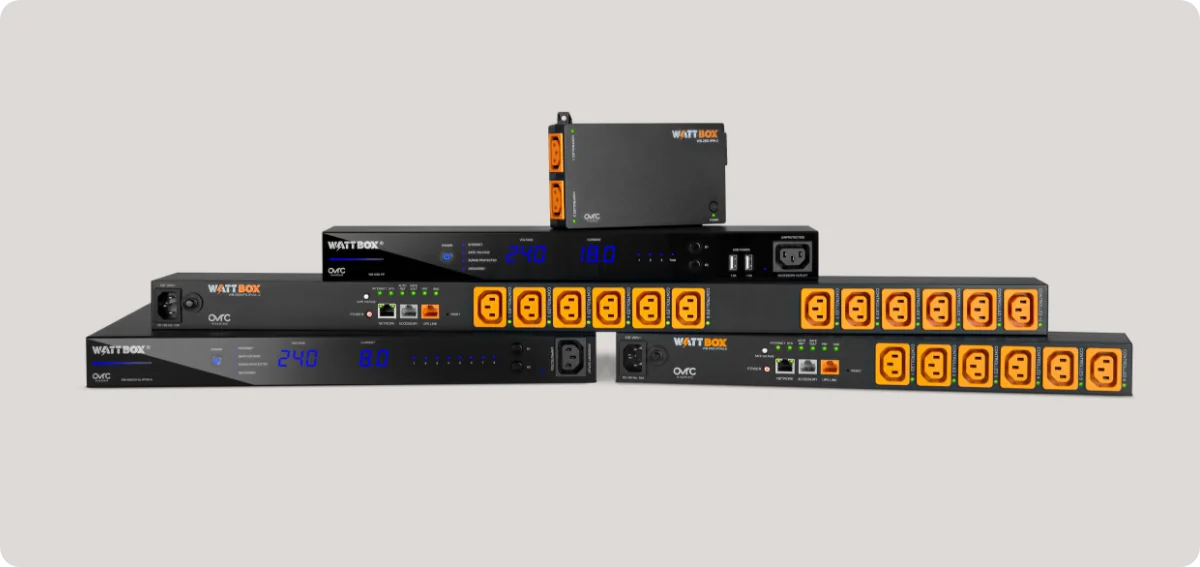
A smart home represents a significant investment in technology. Processors, amplifiers, networking equipment, motorised systems, and display devices — collectively worth tens of thousands of pounds — are all vulnerable to a single event: a power surge. It takes one lightning strike, one grid fluctuation, or one utility fault to cause catastrophic damage to unprotected equipment. At MK Iconic Solutions, we include WattBox power management in every installation as standard — because protecting the investment is as important as making it.
What Power Threats Can Damage Smart Home Equipment?
The UK power grid, while generally reliable, is subject to transient voltage events that most homeowners never notice but that can be devastating to sensitive electronics. A surge — a brief spike in voltage lasting microseconds to milliseconds — can be caused by lightning, utility switching operations, or even the startup of large motors within your own home (air conditioning compressors, lift motors, or workshop equipment). These events are invisible to the naked eye but cumulative in their damage to electronic components.
Beyond surges, power quality issues including brownouts (sustained undervoltage), sags (brief undervoltage events), and electrical noise from dimming systems and motor drives all degrade the performance and lifespan of sensitive equipment. A professional power management system addresses all of these threats, not just the dramatic ones.
Enter WattBox: Three Layers of Protection
WattBox is the power management platform we specify on every installation. Part of the Snap One family — the same parent company as Control4 — WattBox provides three critical functions: advanced surge protection, intelligent power conditioning, and remote power management. Together, these capabilities protect your equipment, optimise its performance, and give us the ability to diagnose and resolve issues remotely.
Each WattBox unit is available in configurations ranging from compact 4-outlet models for single equipment locations to 12-outlet rack-mounted units for fully populated AV racks. All models include the core protection circuitry, cloud connectivity for remote management, and the ability to individually control and monitor each outlet. This per-outlet granularity is critical for intelligent power management — not every device in a rack needs to be powered continuously, and some devices benefit from periodic power cycling.
Surge Protection That Actually Works
WattBox surge protection is not a consumer-grade power strip with a "surge protected" sticker. It is an enterprise-class protection system incorporating coaxial, Ethernet, and mains protection in a single unit — ensuring that surges cannot reach your equipment through any connected pathway. The protection circuitry uses Metal Oxide Varistors (MOVs) in a staged configuration, providing multiple layers of clamping that absorb surge energy progressively.
Connected Equipment Warranty provides financial protection should a surge penetrate the system — an assurance that demonstrates WattBox's confidence in their protection engineering. In our experience over hundreds of installations, WattBox has proven completely reliable: we have never had a protected device damaged by a surge event. Not once. Given the value of the equipment we protect in a fully populated rack, this track record is the strongest endorsement possible.
How Does Remote Power Management Work?
Every WattBox unit connects to the cloud via your local network, allowing us to monitor and manage your equipment remotely. If a device becomes unresponsive — a streaming device freezes, a network switch stops responding, or an amplifier drops offline — we can power-cycle it from our office, often resolving the issue before you even notice. This remote capability is one of the most valuable tools in our support arsenal, reducing service calls and minimising downtime.
The WattBox cloud dashboard provides us with real-time visibility across our entire installed base. We can see power status, energy consumption, and device health for every WattBox unit we have deployed — whether the property is in Cheshire, Dubai, or Miami. Proactive alerts notify us when a device has been unresponsive for longer than a configurable threshold, enabling us to investigate and resolve the issue before it impacts the homeowner's experience.
Automatic Rebooting: Self-Healing Infrastructure
WattBox can be configured to monitor critical devices and automatically reboot them if they become unresponsive. Your router drops offline at 3am? WattBox detects the loss of connectivity and power-cycles it automatically. A streaming device becomes unresponsive? WattBox reboots it and it returns to service without anyone losing sleep. The system self-heals without intervention — a level of resilience that consumer equipment simply cannot match.
We configure automatic rebooting for network infrastructure as standard — the router, primary switch, and wireless access points are all monitored and will be automatically power-cycled if they become unresponsive. For client-facing devices like streaming boxes and audio processors, we typically configure alert-only monitoring, as some devices have longer boot sequences that would be disruptive if cycled unnecessarily. The configuration is tailored to each installation based on the equipment deployed and the client's sensitivity to brief service interruptions.
Energy Monitoring and Scheduled Power
WattBox provides per-outlet energy monitoring, giving visibility into which devices consume the most power and when. This data is valuable for identifying equipment that draws excessive standby power, scheduling power-off periods for devices that are not needed overnight, and verifying that entertainment equipment is actually powering down when automation scenes command it to.
Scheduled power events allow devices to be powered on and off according to a weekly timetable. A home cinema amplifier that is used exclusively on weekday evenings and weekends can be powered off entirely during weekday mornings, eliminating standby consumption and reducing heat generation in the equipment rack. Over the course of a year, these scheduled power savings are meaningful — and they extend the operational lifespan of the equipment by reducing thermal cycling.
Why Is Power Management Essential for Smart Homes?
Power management is not glamorous. It does not have a beautiful interface or a compelling demonstration in the showroom. But it is the silent guardian of your entire smart home investment. Without it, a single electrical event can undo tens of thousands of pounds of carefully designed and installed technology. With it, you have comprehensive protection, remote management capability, self-healing infrastructure, and the peace of mind that comes from knowing the most boring part of your smart home is also the most reliable. At MK Iconic, we consider it as essential as the equipment it protects.
Frequently Asked Questions
Does WattBox replace a whole-house surge protector? WattBox protects the equipment connected to it — typically the contents of your AV rack and networking equipment. For comprehensive property protection, we recommend a Type 2 surge protection device (SPD) installed at the consumer unit in addition to WattBox protection at each equipment location. This two-tier approach provides both whole-property defence at the electrical panel and equipment-specific protection at the point of use.
Can WattBox save energy? Yes. Per-outlet energy monitoring reveals which devices consume the most power, and scheduled power events allow non-essential equipment to be powered off during periods of non-use. A cinema amplifier that idles in standby can be powered off entirely during the hours it is never used. Across a fully populated equipment rack, the cumulative standby savings are meaningful.
What happens if my internet goes down — can WattBox still reboot my router? Yes. WattBox's auto-reboot feature monitors connectivity by pinging configurable IP addresses. When connectivity is lost, WattBox power-cycles the router and modem outlets automatically — no internet connection or cloud access is required for this self-healing function. It operates entirely locally, which is precisely why it is so effective at resolving the most common cause of smart home downtime: network equipment lockups.