
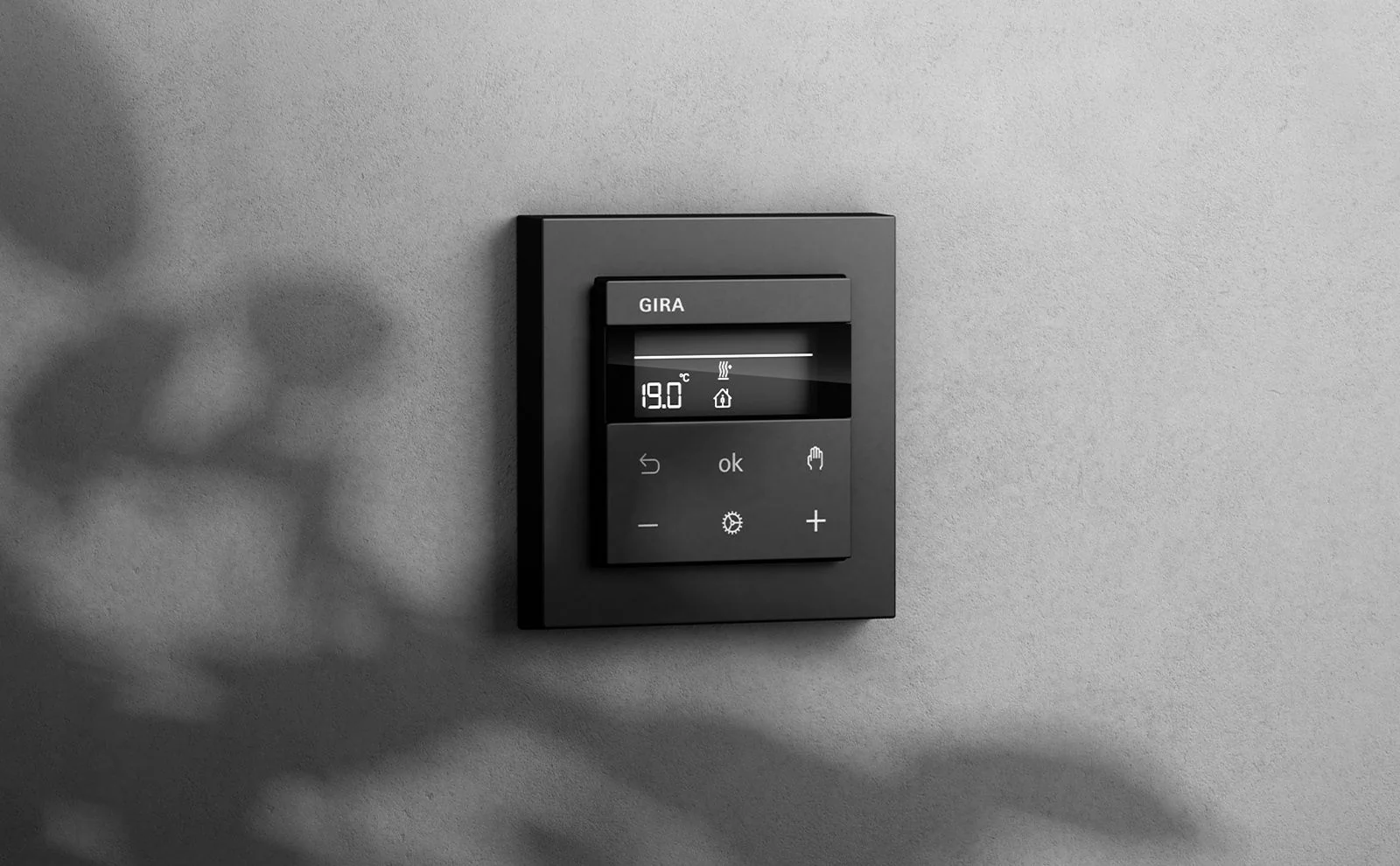
Climate control is one of the most impactful — and most overlooked — aspects of home automation. A truly intelligent home does not simply react to a thermostat setting. It anticipates, adapts, and optimises in real time, responding to occupancy, weather conditions, and the thermal characteristics of each individual room. This is why we specify KNX for every HVAC integration we design at MK Iconic Solutions — and why the results consistently exceed our clients' expectations.
What Is KNX? The Global Open Standard
KNX is an international open standard for building automation, backed by over 500 manufacturers worldwide and governed by the KNX Association headquartered in Brussels. Unlike proprietary systems that lock you into a single vendor's ecosystem, KNX devices from any certified manufacturer communicate seamlessly on the same network. This gives us — and you — extraordinary flexibility in selecting the best components for each application without compatibility concerns.
The protocol has been in continuous use since 1990 and is the dominant building automation standard in Europe, the Middle East, and increasingly in the luxury residential market in the United States. It communicates over dedicated twisted-pair bus cable, IP networks, or radio frequency — and all three media are interoperable. A KNX installation is hardware-agnostic, future-proof, and backed by the largest ecosystem of compatible devices in the building automation industry.
Intelligent Climate Management: Beyond the Thermostat
KNX HVAC integration goes far beyond scheduled temperature adjustments. The system responds to real-time data from multiple sources: occupancy sensors detect which rooms are in use and adjust heating or cooling accordingly. External weather stations anticipate temperature changes — pre-heating the house before a cold front arrives rather than reacting after the temperature has already dropped. Window contacts prevent heating or cooling a room with an open window, eliminating the most common source of wasted energy in domestic buildings.
The intelligence compounds when multiple data sources are correlated. If the weather station reports high solar gain on a south-facing elevation, the KNX system can pre-emptively reduce heating to south-facing rooms while maintaining or increasing it on the north side. If occupancy sensors indicate the house is empty, the system can reduce all zones to an efficient setback temperature while maintaining frost protection. When the first occupant returns — detected by their phone's GPS geofencing — the system begins pre-conditioning the home so that it reaches comfort temperature by the time they walk through the door.
How Does Zone-Based Climate Control Work?
Every room in your home has different thermal characteristics. A south-facing conservatory behaves nothing like a north-facing bedroom. A kitchen generates significant heat from cooking that a study does not. KNX allows independent zone control, ensuring each space reaches and maintains its ideal temperature without affecting adjacent areas.
Underfloor heating, radiator valves, fan coil units, and split systems are all managed from a single, unified platform. In a typical installation, we might specify underfloor heating with individual room thermostats in the ground floor, radiator actuators with room sensors on the upper floors, and a dedicated fan coil unit in the cinema room for rapid cooling during extended viewing sessions. Each system type has different response characteristics — underfloor heating is slow but even, radiators are faster but less uniform — and the KNX system manages each according to its thermal profile.
How Much Energy Does KNX Climate Control Save?
KNX-managed HVAC systems are engineered for efficiency. The system learns your patterns, adjusts to your schedule, and reduces output when spaces are unoccupied — energy goes only where it is needed, only when it is needed. Over the lifetime of an installation — which, for KNX, is measured in decades — those efficiencies compound into meaningful savings.
The energy reporting capabilities of KNX also provide valuable visibility into consumption patterns. Homeowners can see which rooms consume the most energy, which times of day drive peak demand, and how changes in behaviour or settings affect overall consumption. This transparency encourages further optimisation and gives homeowners confidence that their heating system is operating as efficiently as possible.
Integration with Control4
KNX integrates seamlessly with Control4 through dedicated IP gateways, meaning your climate system is accessible through the same interface as your lighting, entertainment, and security. A single "Away" command can set back temperatures, close shades, arm the security system, and switch off non-essential lighting. A "Welcome Home" scene reverses it all — the house begins warming to your preferred temperatures as the lights illuminate your arrival path and the security system disarms.
The integration is bi-directional. Control4 can command KNX temperature setpoints, and KNX sensors can trigger Control4 automations. A room temperature sensor reading above 25°C can trigger Control4 to lower the motorised shades on that elevation, reducing solar gain before the air conditioning needs to compensate. This cross-system intelligence — where climate, shading, and lighting work together as a unified environmental management system — delivers comfort levels and energy efficiency that no single system can achieve alone.
Built for Longevity: A 30-Year Commitment
KNX installations are designed to last the lifetime of the building. The protocol's backwards compatibility ensures that devices installed in 1990 still function with current-generation controllers — a claim that no proprietary smart home system can make. When we specify KNX, we are making a multi-decade commitment to our clients, and the protocol's track record gives us absolute confidence in that promise.
Components can be added, replaced, or upgraded individually without affecting the rest of the system. A temperature sensor installed today can be replaced in fifteen years with a next-generation sensor that offers additional capabilities, and it will integrate seamlessly with the existing bus. This modularity protects the homeowner's investment and ensures the climate system can evolve alongside the rest of the home's technology without requiring wholesale replacement.
The MK Iconic Approach to Climate Design
Every KNX climate project begins with a detailed thermal analysis of the property. We assess room orientations, glazing areas, insulation levels, and heating system types before designing the control architecture. The specification includes sensor placement, actuator selection, control logic, and integration points with Control4 and Lutron shading. The result is a climate system that maintains perfect comfort with minimal energy expenditure — and that operates so unobtrusively that most occupants forget it is there.
Frequently Asked Questions
Is KNX only for new builds? While KNX is most easily installed during new construction or major renovation — when bus cable can be run alongside electrical circuits — retrofit solutions are available using KNX RF (radio frequency) devices. These wireless KNX components communicate with the wired bus via a media coupler, allowing existing properties to benefit from KNX intelligence without extensive rewiring. We assess each property individually and design the most practical installation approach.
How much energy can KNX HVAC save? Savings vary by property, and they come from three primary sources: occupancy-based setback (heating only rooms that are in use), weather-compensated anticipation (adjusting output proactively based on forecast conditions), and cross-system coordination (using Lutron shading to manage solar gain before the HVAC system needs to compensate).
Can KNX control underfloor heating and radiators together? Yes — this is one of KNX's strengths. Each zone can be controlled independently regardless of the heating emitter type. Underfloor heating zones receive proportional control with their slower thermal response accounted for, while radiator zones with thermostatic actuators respond more quickly. The KNX system manages each according to its thermal characteristics, ensuring consistent comfort across the entire property without hot or cold spots.